
Interaction Designer
12 Months
Sam Lorenzo, Danny Pimentel, Luke Walker, Jason deParrie-Turner, Isaac Wu, Leila Okahata, Tai Le
Empathy in Action is a narrative-driven VR game built to explore how immersive, savior-type experiences shape players' empathy, altruism, and moral reasoning. Unlike prior VR research focused on physical rescue scenarios, this project introduced social and moral heroism (everyday interpersonal decisions) as the core mechanic.
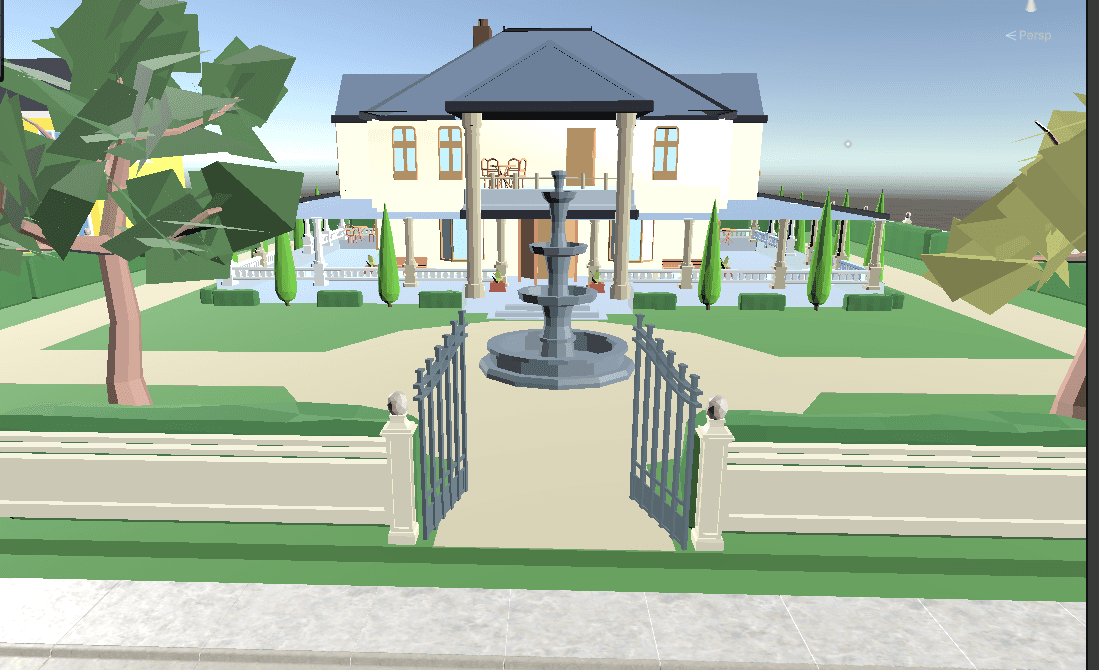
Players inhabit the role of a community volunteer in Unity Springs, a fictional neighborhood, where they help a young boy named Alden find his lost dog. Along the way, they face a series of physical tasks and moral decision points guided by an NPC community guide named Sage. The experience was built in Unity and deployed for a formal mixed-methods research study in Horizon Worlds.
Immersive games create deep emotional engagement, but research on how VR specifically cultivates prosocial behavior remains limited. Previous work has focused almost entirely on physical rescue tasks, leaving social and moral heroism largely unexplored as design territory.
This project asked: can a multi-layered, morally rich VR scenario translate into real-world prosocial attitudes, and if so, what drives that change?
Identify how immersive VR experiences that blend physical tasks, social decision-making, and emotional storytelling influence players' empathy, altruism, and moral reasoning. The goal was to use those findings to inform the design of educational and therapeutic applications in immersive media.
Game Development
Contributed to an early iteration of the VR experience in Unity, building out interactive environment elements and foundational mechanics.
Interaction Design
Designed and refined player-facing interactions, supporting the moral decision-making flow and NPC dialogue structure.
Data Collection
Assisted with the formal research study by running participants through the experience and supporting pre- and post-survey data collection.
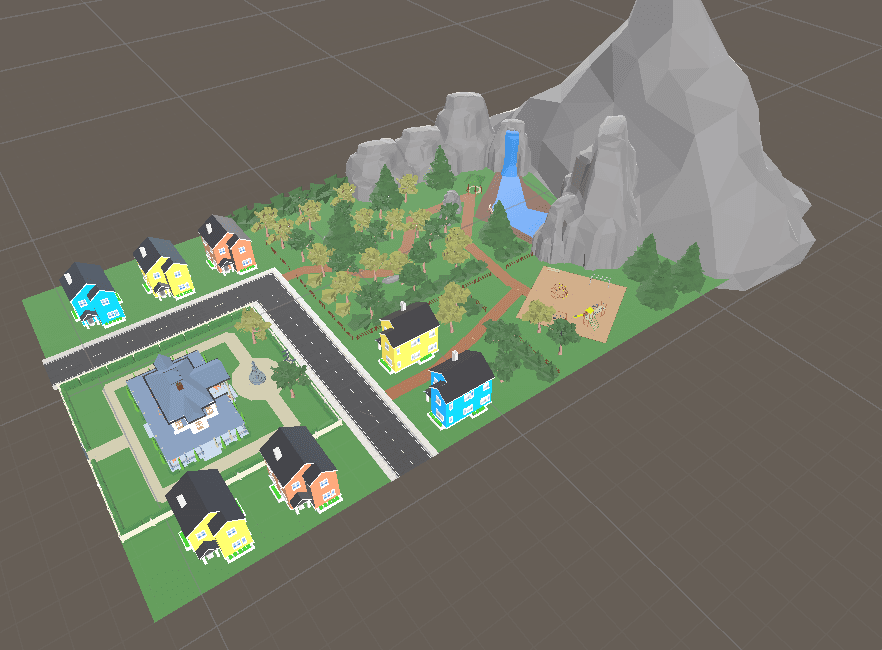
The first phase centered on designing a single, cohesive scenario incorporating elements from three original concepts: a lost dog, a friendship conflict, and a family in crisis. The result was a layered narrative that challenged players with interconnected physical and social tasks inside the fictional community of Unity Springs.
Key Activities
Key Activities:
Developed a narrative-driven scenario set in a close-knit fictional community
Blended physical challenges with social problem-solving and moral reflection
Integrated NPC guide Sage to prompt player reflection throughout the experience
Designed a "What If" feature to illustrate alternative outcomes for moral choices
Outcomes:
Created a scenario that emotionally engages players while driving active decision-making
Established relatable narrative elements that players found impactful in fostering empathy
Produced a ready-to-implement narrative for VR platform integration
With the scenario finalized, the team adapted the experience for Horizon Worlds and conducted a formal mixed-methods study with 64 adult participants. Each participant completed pre- and post-surveys measuring empathy, altruism, immersion, and gameplay effects, followed by a semi-structured interview.
Key Activities:
Adapted narrative and interactive elements for Horizon Worlds' multiplayer environment
Ran 64 adult participants through the full experience
Collected pre- and post-surveys using validated empathy and altruism scales
Conducted semi-structured interviews analyzing moral reflection and real-world transfer
Participants:
64 adults (ages 18+), diverse across gender and generation
Majority were VR novices, with only 2 using VR weekly prior to the study
Mix of frequent gamers and non-players, providing a broad spectrum of perspectives
KEY
FINDINGS
The study produced nuanced findings that challenge common assumptions about the relationship between empathy and altruism in immersive contexts.
+Sig.
Increase in altruistic attitudes post-gameplay (Cohen's d = 0.51)
64
Adult participants across the formal research study
78%
Variance in post-game altruism explained by gameplay-related factors
51 of 64
Participants who explicitly linked in-game behavior to real-life helping
Summary:
Altruism and empathy can decouple. Altruism increased post-gameplay even as self-reported empathy decreased, showing moral agency can drive prosocial behavior independently.
Perceived gameplay effect was the strongest predictor. How meaningful players found the experience outperformed demographics, gaming history, and immersion as a predictor of altruistic outcomes.
Role assignment matters. Being formally cast as a community volunteer shifted players toward a task-focused, obligation-driven mindset rather than a purely emotional one.
Real-world transfer was common. 42 of 64 participants believed the experience could shape real-world helping behavior, and 39 connected in-game decisions to their own personal relationships.
BROADER
IMPACT
This project advances both the theory and practice of immersive prosocial design. By demonstrating that altruism can increase even when empathy tapers, the research complicates the assumption that emotional resonance is a prerequisite for moral action, opening new design directions for VR experiences aimed at social good.
Educational applications: participants and researchers identified classroom settings and younger children as primary candidates for scaled versions of the experience
Therapeutic and rehabilitative use: participants proposed applications in therapy, conflict resolution training, and rehabilitation programs
Industry recognition: a participant with game development experience noted this represents one of very few attempts at an empathy-focused VR game, underscoring the novelty of the design space
For More Information About This Paper